 mfaisalbuttceo@gmail.com
 In the rapidly shifting economic landscape of 2026, the traditional four-year degree is no longer the sole benchmark of professional readiness. As automation, generative AI, and decentralized workforces redefine the “office,” a new gold standard has emerged for career longevity: targeted, high-impact learning. Today, professional business certification courses have evolved from optional resume-fillers into the primary currency of the modern job market.
For professionals looking to pivot or advance, these certifications offer more than just a badge on a LinkedIn profile; they represent a commitment to “future-proofing” one’s expertise against the tides of technological change.
The ROI of Targeted Learning
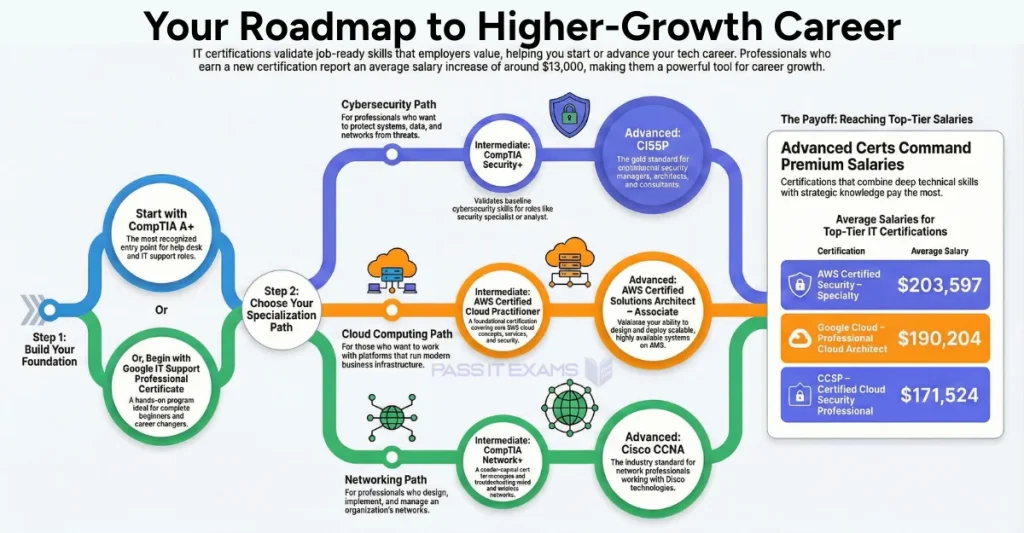
The most immediate benefit of a professional certification is the measurable impact on earning potential. Data from 2025 and 2026 indicates that certified professionals in fields like project management, data analytics, and cybersecurity often command salaries 15% to 25% higher than their non-certified peers.
This “certification premium” exists because employers increasingly prioritize skills-based hiring. In a high-stakes business environment, a certification acts as a verified proof of competency, reducing the risk for hiring managers. It signals that a candidate doesn’t just “know” a subject but has mastered the specific tools—be it SQL for business analysts or Agile methodologies for project leads—that drive corporate efficiency.
Top Certification Domains for 2026
While the list of available credentials is vast, three specific domains are currently dominating the corporate demand:
- AI and Data Integration: With AI integration becoming mandatory for documentation and data handling, certifications that bridge the gap between traditional business strategy and AI implementation are invaluable. Courses focusing on “AI-Enhanced Business Analytics” or “Prompt Engineering for Executives” are currently seeing record enrollment.
- Agile and Strategic Leadership: As businesses move away from rigid hierarchies, the demand for Project Management Professional (PMP) and ScrumMaster credentials remains at an all-time high. These courses equip leaders to manage distributed, remote teams with the precision required in a 24/7 global market.
- Sustainability and ESG (Environmental, Social, and Governance): A significant trend in 2026 is the rise of sustainability certifications. Companies are now legally and socially mandated to report on their environmental impact, making professionals with “ESG Strategy” certifications some of the most sought-after consultants in the industry.
Flexibility: The Digital Advantage
One of the most significant shifts in the 2026 educational model is the accessibility of these programs. The rise of “micro-credentialing” allows busy professionals to complete high-level courses from prestigious institutions like Harvard, Wharton, or Google at their own pace.
| Feature | Traditional Degree | Professional Certification |
| Duration | 2–4 Years | 3–6 Months |
| Cost | High Investment | Scalable/Affordable |
| Curriculum | Broad/Theory-based | Practical/Tool-based |
| Market Agility | Slow to update | Real-time updates |
This flexibility ensures that even a mid-career professional can “reskill” without taking a sabbatical. Whether it’s a 20-hour deep dive into SQL or a 3-month specialization in business strategy, the barrier to entry has never been lower, while the rewards have never been higher.
Building Professional Confidence
Beyond the financial and technical gains, there is a psychological component to certification. Navigating a rigorous exam and mastering a new body of knowledge builds “professional grit.” This confidence often translates into better performance during high-stakes negotiations and a greater willingness to take on complex, strategic projects.
Furthermore, these courses provide access to exclusive professional networks. Earning a credential often grants entry into global communities of alumni and practitioners, providing a secondary layer of mentorship and job referrals that are often more effective than traditional job boards.
Conclusion: The New Career Path
As we look toward the remainder of 2026 and beyond, the message is clear: the most successful professionals will be those who view their education as a continuous, modular process. By investing in professional business certification courses, you aren’t just adding a line to your CV; you are ensuring that your skills remain relevant, your insights remain sharp, and your career remains on an upward trajectory. In the modern economy, the best investment you can make is in the validation of your own expertise.

