 mfaisalbuttceo@gmail.com
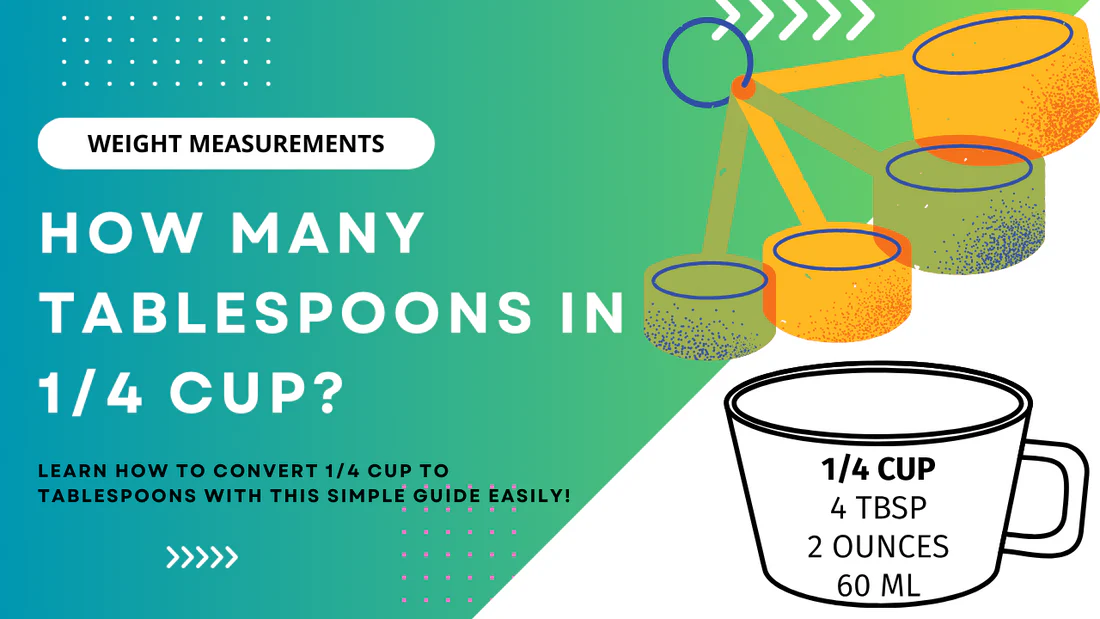
 Have you ever been knee-deep in a brownie recipe, only to realize your measuring cup set is missing the most important piece? We’ve all been there. You reach into the drawer, pull out the quarter-cup, and find it’s gone. This is where a little bit of culinary math saves the day. To answer the most pressing question immediately: there are exactly 4 tablespoons in 1/4 cup.
Understanding this basic ratio is the secret to becoming a more confident, fluid cook. Instead of stopping your momentum to search for a clean measuring cup, you can simply grab your tablespoon and click right along with your preparation. This conversion is a fundamental building block of American imperial measurements, and once you commit it to memory, your time in the kitchen becomes significantly more efficient.
Why Precise Measurements Matter in Cooking and Baking
In the world of culinary arts, there is a distinct difference between “cooking” and “baking.” When you are making a savory stew or a stir-fry, a little extra splash of broth or a pinch more salt rarely ruins the dish. However, baking is essentially chemistry. When you ask how many tablespoons in 1/4 cup, you are usually dealing with ingredients like baking soda, sugar, or fats that require precision to react correctly.
If you miscalculate and add too much or too little of a key ingredient, the structural integrity of your cake or the chewiness of your cookie can be compromised. Using the 4-tablespoon rule ensures that your ratios remain perfect, even when you are improvising with the tools you have on hand. It turns a potential kitchen disaster into a seamless substitution.
The Breakdown: Tablespoons, Teaspoons, and Cups
To truly master kitchen conversions, it helps to see the “family tree” of measurements. If we know that 1/4 cup equals 4 tablespoons, we can expand that logic to understand the rest of the measuring set. For instance, if you need a half cup, you simply double your math to 8 tablespoons. If you need a full cup, you reach 16 tablespoons.
But what about the smaller increments? Each tablespoon is comprised of 3 teaspoons. Therefore, if a recipe calls for how many tablespoons in 1/4 cup and you only have a teaspoon available, you would need 12 teaspoons to fill that requirement. Seeing the relationship between these units—teaspoons to tablespoons, and tablespoons to cups—allows you to scale recipes up or down without losing the balance of flavors.
Liquid vs. Dry Measurements: Is There a Difference?
One of the most common points of confusion for home cooks is whether a “cup” of milk is the same as a “cup” of flour. Technically, the volume remains the same; however, the method of measurement changes significantly. When measuring 4 tablespoons of oil to reach that 1/4 cup mark, you should use a liquid measuring spoon and check it at eye level.
For dry ingredients like flour or cocoa powder, the “spoon and level” method is vital. Do not pack the ingredient into the tablespoon unless the recipe specifically calls for it (like with brown sugar). Simply spoon the ingredient in until it overflows, then use the back of a knife to level it off. This ensures that your 4 tablespoons actually equal the intended weight of a 1/4 cup, preventing your baked goods from becoming overly dry or dense.
Common Substitutions Using the 1/4 Cup Conversion
Knowing the answer to how many tablespoons in 1/4 cup opens up a world of easy substitutions. Many professional chefs prefer using tablespoons for smaller amounts because they provide more control. For example, if you are making a salad dressing and need 1/4 cup of balsamic vinegar, using 4 individual tablespoons can help you stop at 3 if you decide the acidity is already strong enough.
This conversion is also incredibly helpful for health-conscious cooking. If a recipe calls for a 1/4 cup of butter, knowing that this is 4 tablespoons (or half a standard stick of butter in the US) makes it much easier to track caloric intake or swap in a healthier fat like applesauce or Greek yogurt.
International Variations: US vs. Metric Systems
While the “4 tablespoons to 1/4 cup” rule is standard in the United States, it is important to note that different countries have slightly different definitions of these units. The US Legal Cup is roughly 240 milliliters, while the Imperial Cup used in some older British recipes is about 284 milliliters.
Fortunately, most modern recipes online use the standard US conversion. If you are following a metric recipe from Europe or Australia, they may use grams or milliliters instead. In those cases, 1/4 cup is approximately 60 milliliters. Regardless of the system, the tablespoon remains a reliable anchor for small-scale measurements across global cuisines.
Tips for Remembering Your Kitchen Conversions
If you find it difficult to remember how many tablespoons in 1/4 cup while in the heat of cooking, there are a few tricks to keep the math straight. Many people use a “Gallon Man” style visualization or keep a small magnetic conversion chart on their refrigerator.
Another easy way to remember is the “Rule of Fours.”
- 4 Tablespoons = 1/4 Cup
- 4 Quarters = 1 Whole (just like a dollar)
- 16 Tablespoons = 1 Full Cup ($4 \times 4$)
By associating these numbers with everyday logic, you’ll find that you rarely have to reach for your phone to search for a conversion mid-recipe.
Leveling Up Your Culinary Skills
Mastering the basics of measurement is the first step toward culinary independence. When you no longer feel restricted by the specific tools in your drawer, you can focus on the art of the flavors themselves. Understanding how many tablespoons in 1/4 cup is a small but mighty piece of knowledge that bridges the gap between a novice cook and an experienced home chef.
Next time you find yourself without the right measuring cup, don’t panic. Just remember the number four, grab your tablespoon, and keep creating. Whether you are whisking a delicate sauce or folding together a batter, your precision will be the foundation of your success.

